
If you’re paralyzed by the BONDAGE of sin, you don’t need to fight this battle on your own. There is FREEDOM when we come out of the shadows, allowing others to come alongside us, to fight against this sin together. To come up with a specific plan on how we can grow stronger together, in Him, Email Rob (or text at 630.770.0439).
Below are additional resources of videos, links, tools, and expanded notes to supplement the sermon
preached by Rob Blair at Harbour Shores Church on March 22nd, 2026
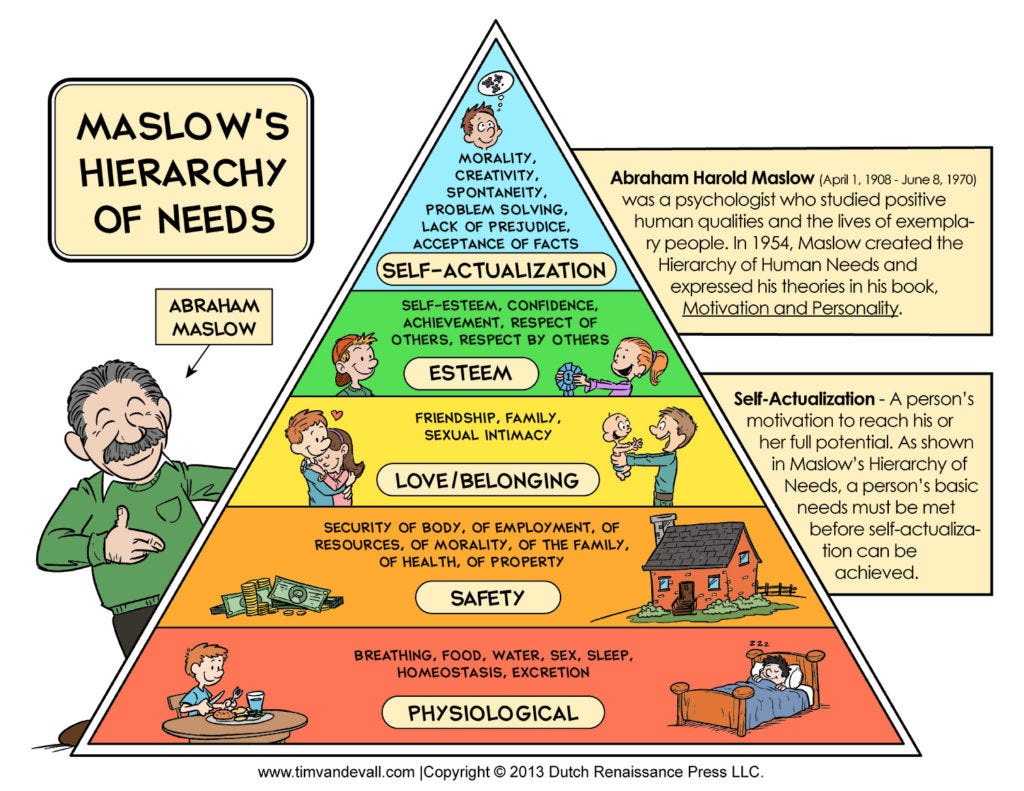
Introduction: You don’t have to look far to see our culture/society is paralyzed by an identity crisis. Terms like: gender fluidity, gender confusion, gender dysphoria, demonstrates the anxiety on the one side. While self-esteem, self-actualization, and the pressure to becoming the best version of yourself–as defined by oneself, indulges our self-centered euphoria on the other side.
The good news is there is a cure for this type of paralysis. It is the same life giving medicine which Jesus gave to the paralytic who was lowered down before Him in Mark 2:1-12.
But before we can exact the cure, we need to better understand the crippling effect of this paralysis.
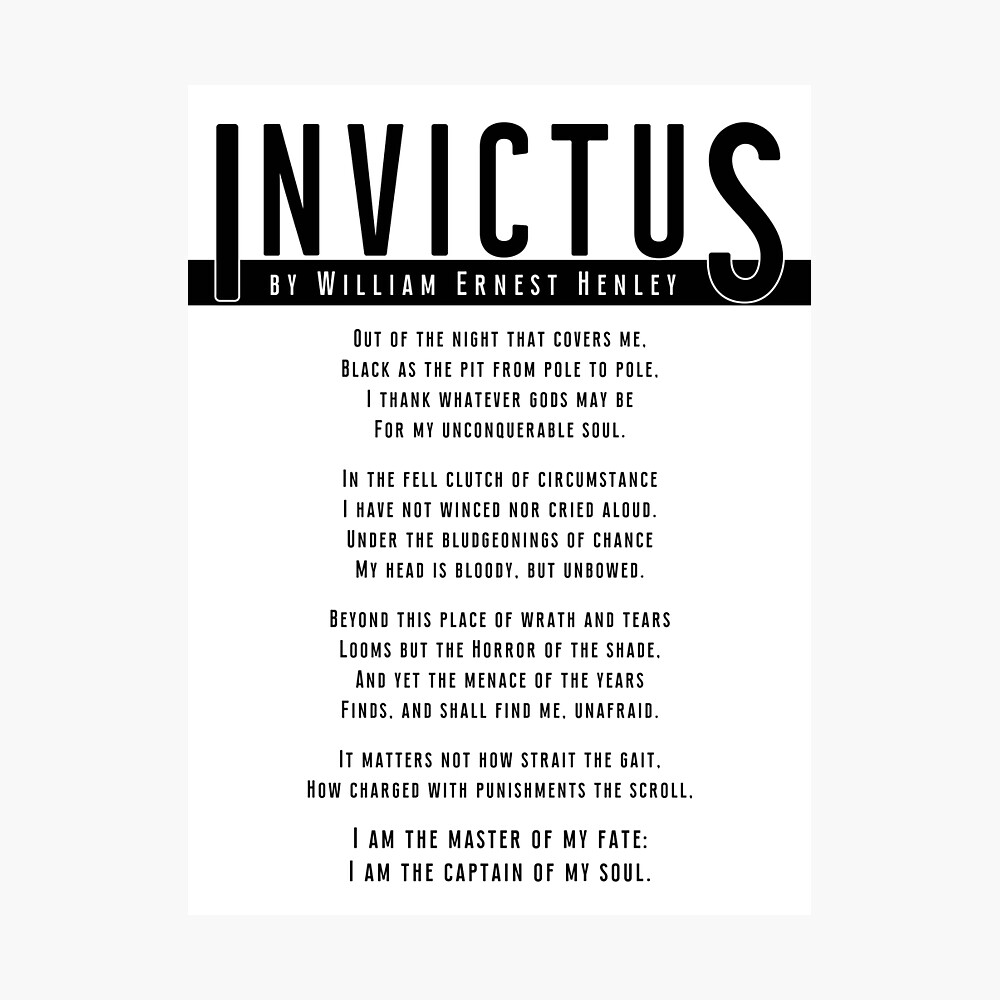
The teen was William Ernest Henley and his poem “Invictus”, expressed the spirit of the modern age, as mankind fought to free itself from the ultimate authority of a supreme, divine Being.
You’re probably familiar with the words,
“I am the master of my fate. I am the captain of my soul.”
Yet few could’ve imagined such words were penned by an English teenager battling tubercular arthritis. Tragically, this childhood illness resulted in the amputation of the boy’s leg. While recovering from the surgery, this short poem would give voice to existentialism as well as self-actualization.
The truth is, humanity was losing life in the lower limbs of its identity far before “Invictus” was ever written. It goes as far back as Genesis 11:1-9 when a unified humanity conspired together; (v. 4)
Then they said, “Come, let us build ourselves a city and a tower with its top in the heavens, and let us make a name for ourselves, lest we be dispersed over the face of the whole earth.”
The phrase “let us make a name for ourselves” seems harmless enough. Like making one’s own way in the world, building a reputation for one’s self. The truth behind this phrase however, literally means, “let us make for ourselves our name.” Naming in scripture always denotes ownership of, and authority over. The one who names something/someone has authority over it. The people in Gen. 11 were declaring self-autonomy. “No body owns us, but us. So we will name ourselves.”
This concept of determining one’s own identity, purpose in life, and self-autonomy (i.e. self-rule) actually started at the very beginning. Back in Genesis 3:1-7 when the very first man and women fell for the lie of the enemy, that said they could decide for themselves what was right or wrong. They didn’t need God to rule over them. They would be, “masters of their own fate, the captains of their own souls.”
A refrain which has been echoing throughout the halls of humanity ever since.
“Existence precedes Essence.”
This may sound harmless, until Sartre explains the meaning. He believed humans are ‘thrown’ into existence without any kind of fixed essence or substance. Human ‘nature’ doesn’t exist, only a human condition. Or put another way, there is no predefined ‘subject’, no fixed identity, pre-ordained path, or objective origin.
Therefore, if there is no predefined essence of individual personhood until after we exists, then we’re free to define our own essence; determine our own identity, and design whatever purpose for living we desire.
This flies in direct contrast with the biblical worldview where God not only knew us personally and intimately (i.e. our personal essence) before we ever existed (Jeremiah 1:5 ), but He also gives us the ultimate reason for living (Col. 1:16b–18).
This means when (not if) something bad, negative, and tragic happens to, and/or around us in this fallen, sin-filled world, there is not only a purpose for living, but also for suffering with a genuine hope. (Psalm 119:67,71)
If you think identity paralysis hasn’t infected you, have you ever thought, said, or acted out such things as; ‘Believe in yourself.’ ‘Be true to yourself.’ or ‘Be all you can be’? If so, then this paralysis may already be crippling us.

Every human being who has ever lived or will ever live has asked, is asking, or will ask four basic questions: Who am I? Why am I here? What is wrong with the world? and How can what is wrong be made right? While we may not say them, it is in the soul of every person to wrestle with these questions.
Allow me to answer these questions first from the perspective of our culture and then from the perspective of the Bible.
Message by Voddie Baucham answering the ultimate questions.
Q1: Who am I?
Q2: Why am I here?
Q3: What is wrong with the world?
Q4: How can what is wrong be made right?
Answers from Our Culture
Who am I? You are an accident. You are a mistake. You are a glorified ape. You are the result of random evolutionary process. That’s it. No rhyme. No reason. No purpose. This is the pathetic reality when evolution runs its full course. If the idea is carried to its logical conclusion, human beings have no value. You are ultimately nothing.
Why am I here? You are here to consume and enjoy. That’s the only thing that matters. When the famous philanthropist John D. Rockefeller was asked, “How much money is enough?” he was as honest as any man has ever been. He responded, “Just a little bit more.” Consume and enjoy—that’s why you’re here.
What is wrong with the world? People are either insufficiently educated or insufficiently governed. That’s what’s wrong with the world. People either don’t know enough, or they’re not being watched enough.
How can what is wrong be made right? The solution is more education and more government. Teach people more stuff and give them more information. How do we combat AIDS? Through AIDS awareness. How do we combat racism? Anti-hate classes. What about the man who beats his wife? Anger-management classes. Just give people more information and everything will be fine.
The answers provided by our culture leave us wanting and empty. Let’s now take a look at how God’s Word, the Bible, answers these same questions.
Answers from the Bible
Who am I? You cannot figure out who you are until you first discover who Jesus Christ is. Jesus “is the image of the invisible God. . . . By him all things were created, . . . all things were created through him and for him” (Colossians 1:15–16). He is the exact representation of God. He is the picture of God in human flesh. He is God on this earth. He is God with us, God among us.
The Bible says that I am created by God—in his image and likeness (Genesis 1:26). Not the result of random processes. The Bible says that whether I am tall and beautiful or small and not so handsome, whether my body functions perfectly or is severely deformed, I am the crowning glory of the creation of God, and as a result I have inherent dignity, worth, and value.
Why am I here? “All things were created through him and for him, . . . that in everything he might be preeminent” (Colossians 1:16b–18). The ultimate purpose of all things is to bring glory and honor to Jesus Christ. That’s why I exist. That is why you exist. And because of this, contrary to the view of our culture, the reason for my existence goes far beyond consumption and enjoyment.
What is wrong with the world? I am. You are. Despite the fact that we are the crowning glory of the creation of God, created to live and bring glory and honor to the Lord Jesus Christ, we are instead hostile and disobedient toward the one by whom and for whom we were created. “All we like sheep have gone astray; we have turned—every one—to his own way” (Isaiah 53:6). The Bible calls this disobedience toward God “sin,” and it says that “all have sinned and fall short of the glory of God” (Romans 3:23). In short, sin is what’s wrong with the world.
How can what is wrong be made right? What is wrong can only be made right by the substitutionary, atoning death of Christ. “He [Jesus] has now reconciled [you] in his body of flesh by his death, in order to present you holy and blameless and beyond reproach before him” (Colossians 1:22). There is no other means by which we can be made right with God. “There is salvation in no one else, for there is no other name under heaven given among men by which we must be saved” (Acts 4:12).
The Bible says, “For our sake [God] made him [Jesus] to be sin who knew no sin, so that in him we might become the righteousness of God” (2 Corinthians 5:21). There was nothing else that could have been done that would have allowed God to be righteous and also the one who makes us right. In the mercy of God the Father he punished his Son in our place in order to satisfy his righteous wrath against sin. Our only hope is to believe in Jesus who was crucified for us and rose again (1 Corinthians 1:23; 15:3–4). The sinless Lamb of God gave his life to pay a debt that he did not owe on behalf of sinners who could never pay him back!
The Ultimate Answer
If these two sets of answers—from our culture and from the Bible—are placed side by side, something very interesting happens. With the answers from our culture, you are left worthless, empty, and hopeless. You’re on your own to pursue satisfaction . . . and you’ll never find it. But the Bible says you are precious. You have purpose. You were purchased.
The only way what is wrong in your life can be made right is for you to believe what the Bible says. Believe that Jesus took the punishment for your sins by dying on the cross as a substitute for you and that he rose from the dead three days later, showing that God had accepted his death on the cross as the payment for the sin-debt that you owed to God. If you believe this to be true, repent of (completely turn from) your sinful patterns of life, and place your faith completely in Jesus Christ. God promises “if you confess with your mouth that Jesus is Lord and believe in your heart that God raised him from the dead, you will be saved” (Romans 10:9).
The answer to life’s ultimate questions is Christ. Those who walk aimlessly through this life will never be satisfied with the answers our culture gives. Christ is the only one who will ever satisfy. Have you entrusted your life to him?
Message by R. C. Sproul explains the meaning of the title “Son of Man”.
13 “I saw in the night visions, and behold, with the clouds of heaven there came one like a son of man, and he came to the Ancient of Days and was presented before him.
14 And to him was given dominion and glory and a kingdom, that all peoples, nations, and languages should serve him; his dominion is an ever-lasting dominion, which shall not pass away, and his kingdom one that shall not be destroyed.
by Melinda Reinicke, Parables for Personal Growth (San Diego, CA: Recovery Publications, Inc., 1993), pp. 5-9.
There was once a great and noble King whose land was terrorized by a crafty dragon. Like a massive bird of prey, the scaly beast delighted in ravaging villages with his fiery breath. Hapless victims ran from their burning homes, only to be snatched into the dragon’s jaws or talons. Those devoured instantly were deemed more fortunate than those carried back to the dragon’s lair to be devoured at his leisure. The King led his sons and knights in many valiant battles against the dragon.
Riding alone in the forest, one of the King’s sons heard his name purred low and soft. In the shadows of the ferns and trees, curled among the boulders, lay the dragon. The creature’s heavy lidded eyes fastened on the prince, and the reptilian mouth stretched into a friendly smile.
“Don’t be alarmed,” said the dragon, as gray wisps of smoke rose lazily from his nostrils.
“I am not what your father thinks.”
“What are you, then?” asked the prince, warily drawing his sword as he pulled in the reins to keep his fearful horse from bolting.
“I am pleasure,” said the dragon. “Ride on my back and you will experience more than you ever imagined. Come now. I have no harmful intentions. I seek a friend, someone to share flights with me. Have you never dreamed of flying? Never longed to soar in the clouds?”
Visions of soaring high above the forested hills drew the prince hesitantly from his horse. The dragon unfurled one great webbed wing to serve as a ramp to his ridged back. Between the spiny projections, the prince found a secure seat. Then the creature snapped his powerful wings twice and launched them into the sky. The prince’s apprehension melted into awe and exhilaration.
From then on, he met the dragon often, but secretly, for how could he tell his father, brothers or the knights that he had befriended the enemy? The prince felt separate from them all. Their concerns were no longer his concerns. Even when he wasn’t with the dragon, he spent less time with those he loved and more time alone.
The skin on the prince’s legs became calloused from gripping the ridged back of the dragon, and his hands grew rough and hardened. He began wearing gloves to hide the malady. After many nights of riding, he discovered scales growing on the backs of his hands as well. With dread he realized his fate were he to continue, and so he resolved to return no more to the dragon.
But, after a fortnight, he again sought out the dragon, having been tormented with desire. And so it transpired many times over. No matter what his determination, the prince eventually found himself pulled back, as if by the cords of an invisible web. Silently, patiently, the dragon always waited.
One cold, moonless night their excursion became a foray against a sleeping village. Torching the thatched roofs with fiery blasts from his nostrils, the dragon roared with delight when the terrified victims fled from their burning homes. Swooping in, the serpent belched again and flames engulfed a cluster of screaming villages. The prince closed his eyes tightly in an attempt to shut out the carnage.
In the pre dawn hours, when the prince crept back from his dragon trysts, the road outside his father’s castle usually remained empty. But not tonight. Terrified refugees streamed into the protective walls of the castle. The prince attempted to slip through the crowd to close himself in his chambers, but some of the survivors stared and pointed toward him.
“He was there,” one woman cried out, “I saw him on the back of the dragon.” Others nodded their heads in angry agreement. Horrified, the prince saw that his father, the King, was in the courtyard holding a bleeding child in his arms. The King’s face mirrored the agony of his people as his eyes found the prince’s. The son fled, hoping to escape into the night, but the guards apprehended him as if he were a common thief. They brought him to the great hall where his father sat solemnly on the throne. The people on every side railed against the prince.
“Banish him!” he heard one of his own brothers angrily cry out.
“Burn him alive!” other voices shouted.
As the king rose from his throne, bloodstains from the wounded shone darkly on his royal robes.
The crowd fell silent in expectation of his decree. The prince, who could not bear to look into his father’s face, stared at the flagstones of the floor.
“Take off your gloves and your tunic,” the King commanded. The prince obeyed slowly, dreading to have his metamorphosis uncovered before the kingdom. Was his shame not already enough?
He had hoped for a quick death without further humiliation. Sounds of revulsion rippled through the crowd at the sight of the prince’s thick, scaled skin and the ridge growing along his spine.
The king strode toward his son, and the prince steeled himself, fully expecting a back handed blow even though he had never been struck so by his father.
Instead, his father embraced him and wept as he held him tightly. In shocked disbelief, the prince buried his face against his father’s shoulder.
“Do you wish to be freed from the dragon, my son?”
The prince answered in despair, “I wished it many times, but there is no hope for me.”
“Not alone,” said the King. “You cannot win against the dragon alone.”
“Father, I am no longer your son. I am half beast,” sobbed the prince.
But his father replied, “My blood runs in your veins. My nobility has always been stamped deep within your soul.”
With his face still hidden tearfully in his father’s embrace, the prince heard the King instruct the crowd, “The dragon is crafty. Some fall victim to his wiles and some to his violence. There will be mercy for all who wish to be freed. Who else among you has ridden the dragon?”
The prince lifted his head to see someone emerge from the crowd. To his amazement, he recognized an older brother, one who had been lauded throughout the kingdom for his onslaughts against the dragon in battle and for his many good deeds. Others came, some weeping, others hanging their heads in shame.
The King embraced them all.
“This is our most powerful weapon against the dragon,” he announced. “Truth. No more hidden flights. Alone we cannot resist him.”